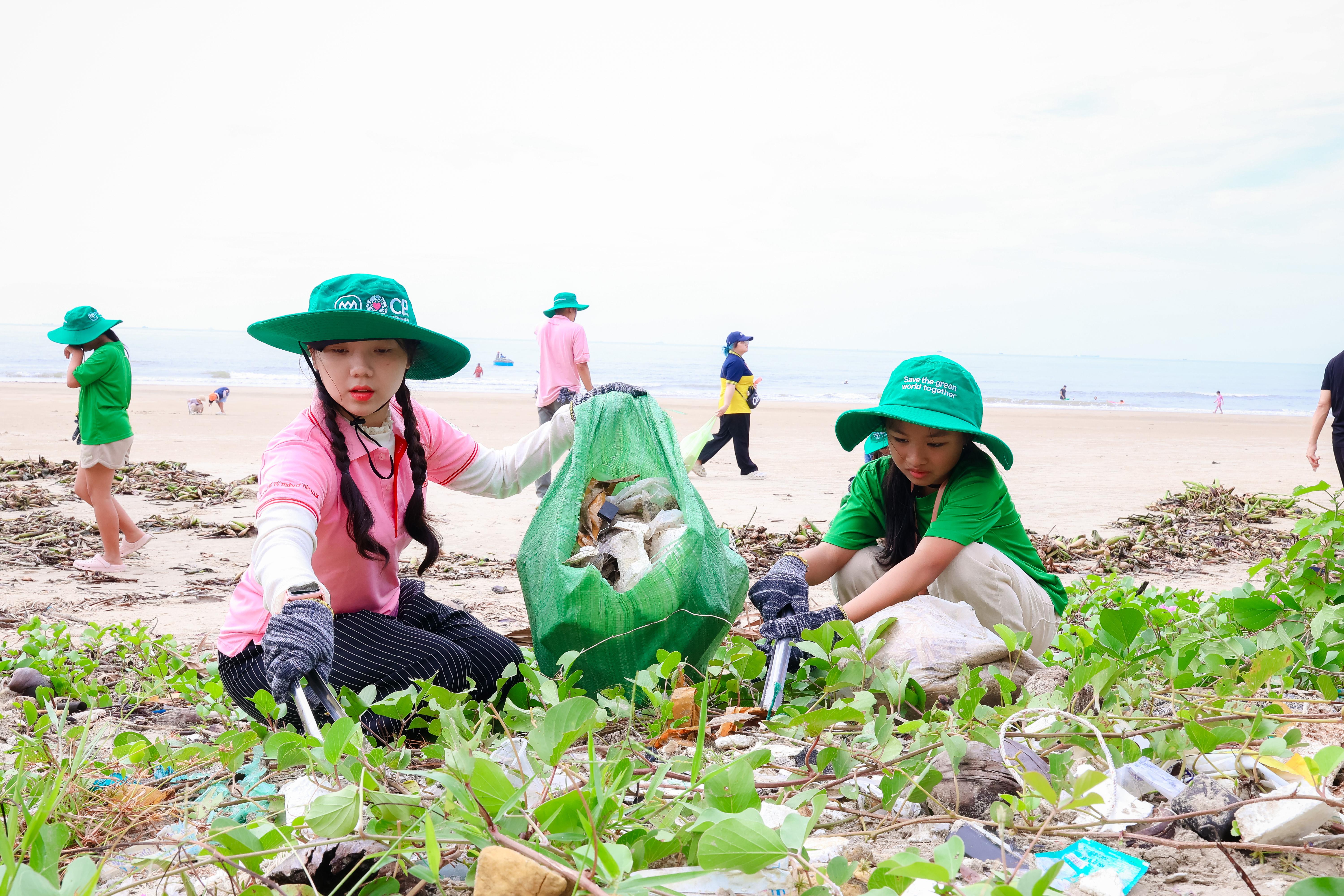
In recent years, the world has faced numerous challenges, including climate change, the depletion of natural resources, environmental pollution, and economic and social instability. These realities demonstrate that economic growth needs to go hand in hand with environmental protection, efficient resource use, and improvements in quality of life.
For businesses, sustainable development is not only an inevitable trend but also an important direction in long-term development strategies. It helps strengthen competitiveness, build brand reputation, and create positive value for communities.
1. What Is Sustainable Development? The Concept and Three Core Pillars
1.1. What Is Sustainable Development?
Sustainable development is development that meets the needs of the present without compromising the ability of future generations to meet their own needs. This concept was defined in the Brundtland Report, published in 1987 by the United Nations World Commission on Environment and Development (WCED), and remains a foundation for development policies around the world today.
The concept emerged against the backdrop of rapid industrialization during the 1960s and 1970s. During this period, economic expansion brought significant achievements but also led to serious consequences, including environmental pollution, the depletion of natural resources, and various social challenges.
In response to these challenges, IUCN, together with UNEP and WWF, published the World Conservation Strategy in 1980, contributing to the development and shaping of the concept of “sustainable development.” The concept continued to evolve following the establishment of the Brundtland Commission by the United Nations in 1983. The publication of the Brundtland Report in 1987 marked an important turning point, emphasizing that economic growth must go hand in hand with environmental protection and social equity to lay the foundation for long-term development.
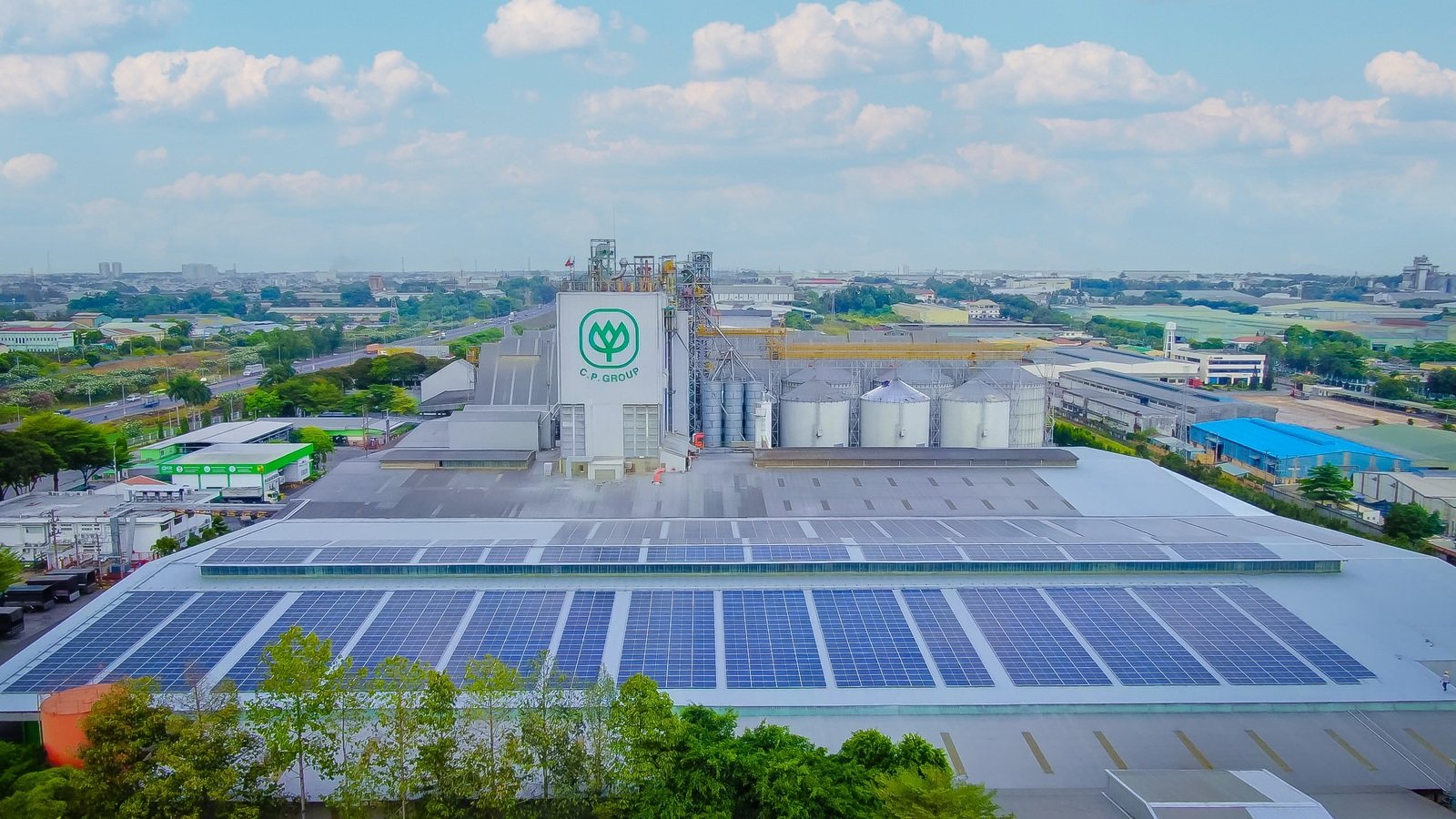
Sustainable development must go hand in hand with environmental protection and social equity.
1.2. The Three Core Pillars of Sustainable Development
Sustainable development is built on three main pillars: economic, social, and environmental. These three factors are closely interconnected and need to be developed in balance.
- Economic: Aims to achieve stable, long-term economic growth while making efficient use of natural resources. The goal is to create wealth, improve income and competitiveness, while minimizing negative impacts on the environment.
- Social: Focuses on improving people's quality of life by building a fair and equitable society. Everyone should have equal access to education, healthcare, employment, and essential services, enabling people to develop and benefit from shared progress.
- Environmental: Focuses on protecting and restoring ecosystems. Development activities must go hand in hand with the responsible use of natural resources, reducing greenhouse gas emissions, controlling air, water, and soil pollution, conserving biodiversity, and proactively adapting to climate change.
2. Understanding the 17 Sustainable Development Goals
In 2015, the United Nations adopted the 17 Sustainable Development Goals (SDGs) as part of the 2030 Agenda for Sustainable Development. These goals address a broad range of economic, social, and environmental issues, including poverty eradication, environmental protection, quality education, equality, and sustainable economic growth. They provide a shared framework for action, guiding countries in working together to build a sustainable world by 2030. The 17 SDGs are:
- Goal 1: End poverty in all its forms everywhere.
- Goal 2: End hunger, achieve food security and improved nutrition, and promote sustainable agriculture.
- Goal 3: Ensure healthy lives and promote well-being for all at all ages.
- Goal 4: Ensure inclusive and equitable quality education and promote lifelong learning opportunities for all.
- Goal 5: Achieve gender equality and empower all women and girls.
- Goal 6: Ensure availability and sustainable management of water and sanitation for all.
- Goal 7: Ensure access to affordable, reliable, sustainable, and modern energy for all.
- Goal 8: Promote sustained, inclusive, and sustainable economic growth, full and productive employment, and decent work for all.
- Goal 9: Build resilient infrastructure, promote inclusive and sustainable industrialization, and foster innovation.
- Goal 10: Reduce inequality within and among countries.
- Goal 11: Make cities and human settlements inclusive, safe, resilient, and sustainable.
- Goal 12: Ensure sustainable consumption and production patterns.
- Goal 13: Take urgent action to combat climate change and its impacts.
- Goal 14: Conserve and sustainably use the oceans, seas, and marine resources for sustainable development.
- Goal 15: Protect, restore, and promote sustainable use of terrestrial ecosystems, sustainably manage forests, combat desertification, halt land degradation, and halt biodiversity loss.
- Goal 16: Promote peaceful and inclusive societies, provide access to justice for all, and build effective, accountable, and inclusive institutions at all levels.
- Goal 17 : Strengthen the means of implementation and revitalize the global partnership for sustainable development.
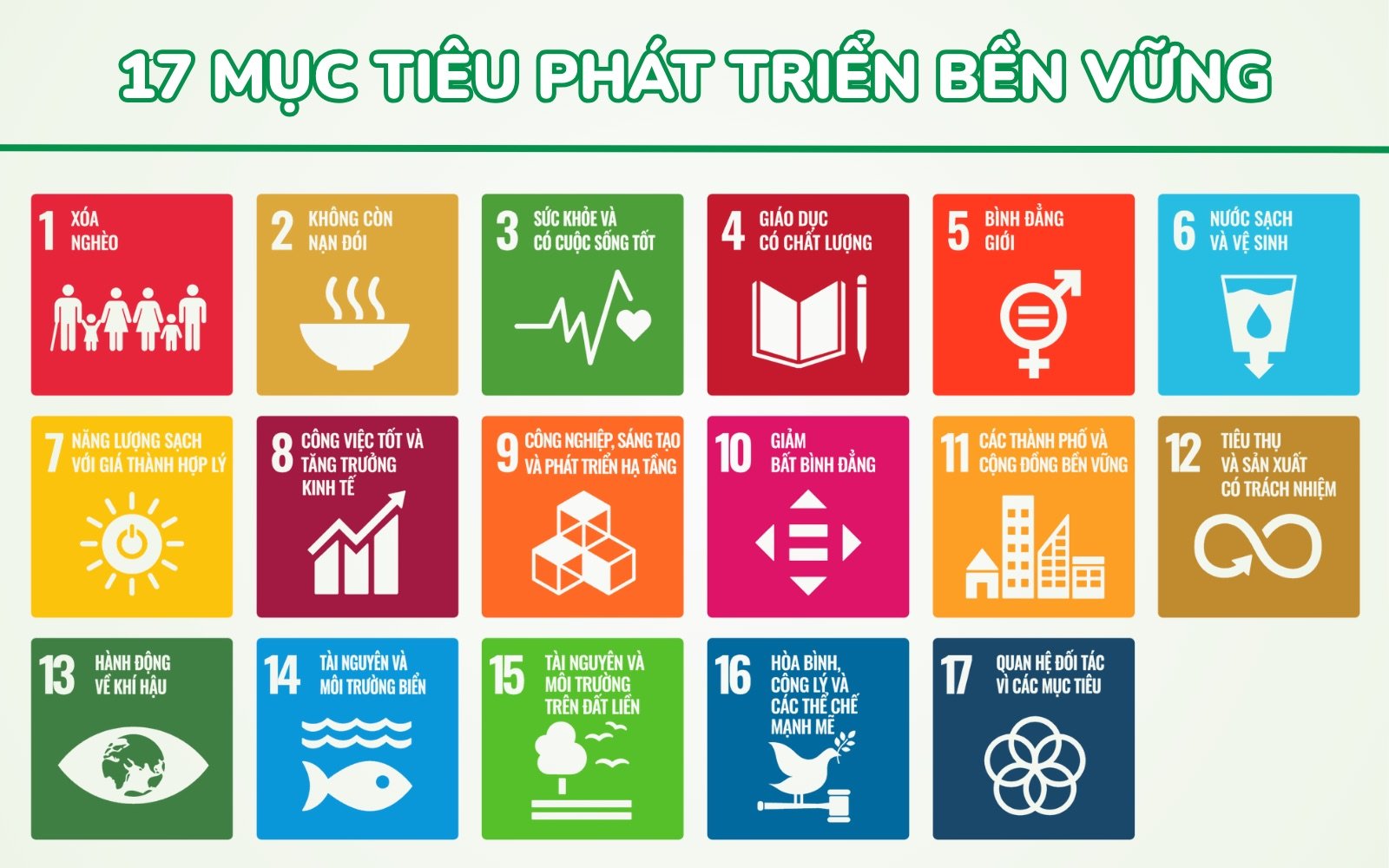
Chi tiết 17 mục tiêu phát triển bền vững mà Liên Hợp Quốc đang thực hiện tại Việt Nam (Nguồn: vietnam.un.org)
3. Why Is Sustainable Development a Strategic Goal for Businesses?
In the context of globalization, sustainable development has become an important factor in helping businesses maintain their competitiveness and adapt to changes in the market.
1 - Enhancing competitiveness through ESG standards (ESG Score)
ESG (Environmental, Social, and Governance) has become an important measure for assessing a company’s capabilities and level of sustainable development. Strong ESG performance can open up a range of opportunities for businesses, including attracting investors, accessing preferential financing and green capital from banks and financial institutions, and meeting stringent technical requirements for expanding into major export markets.
2 - Reducing legal and operational risks
Regulations related to carbon emissions, traceability, the circular economy, and environmental standards are becoming increasingly stringent. By proactively adopting sustainable development practices, businesses can reduce the risk of legal violations, mitigate supply chain risks, and better prepare for changes in the business environment.
3 - Creating sustainable value for communities and attracting talent
Consumers are increasingly inclined to choose environmentally friendly products and services, such as biodegradable products, products made from recycled materials, products that consume less energy, and products manufactured and used with fewer harmful chemicals.
Therefore, a sustainable development strategy helps businesses strengthen trust and build stronger relationships with customers. At the same time, a fair, transparent, and people-oriented workplace serves as a guiding principle for attracting and retaining talent, laying the foundation for long-term growth.
>> Read more
- Learn about the 5 modern agricultural models for sustainable development
- IoT applications in smart agriculture
- TOP 5 livestock wastewater treatment technologies
4. C.P. Vietnam: Driving Sustainable Development Through Practical Action
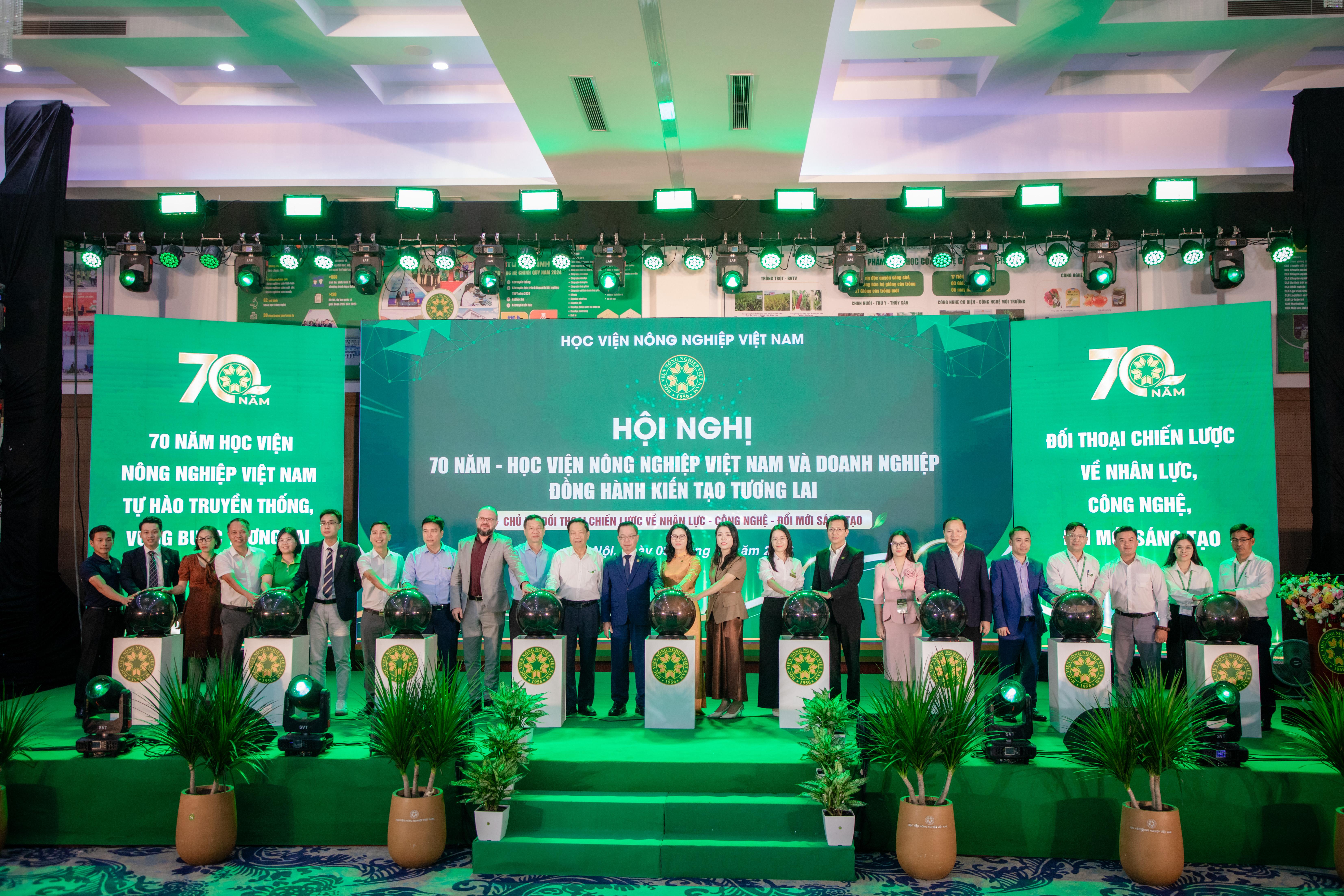
Guided by the “From Farm to Family” approach and the “Three Benefits” philosophy, creating value for the Country, the People, and the Company; C.P. Vietnam continues to promote sustainable development throughout its value chain. These efforts are reflected across its production and business activities, with a focus on three core pillars:
- Kiến tạo thực phẩm bền vững: Doanh nghiệp kiên định theo đuổi định hướng “Từ trang trại đến bếp nhà” (From Farm to Family) thông qua việc vận hành mô hình tích hợp Feed - Farm - Food. Hệ thống này giúp kiểm soát chặt chẽ nguyên liệu đầu vào, bảo đảm chất lượng, an toàn thực phẩm và tăng cường khả năng truy xuất nguồn gốc minh bạch cho người tiêu dùng.
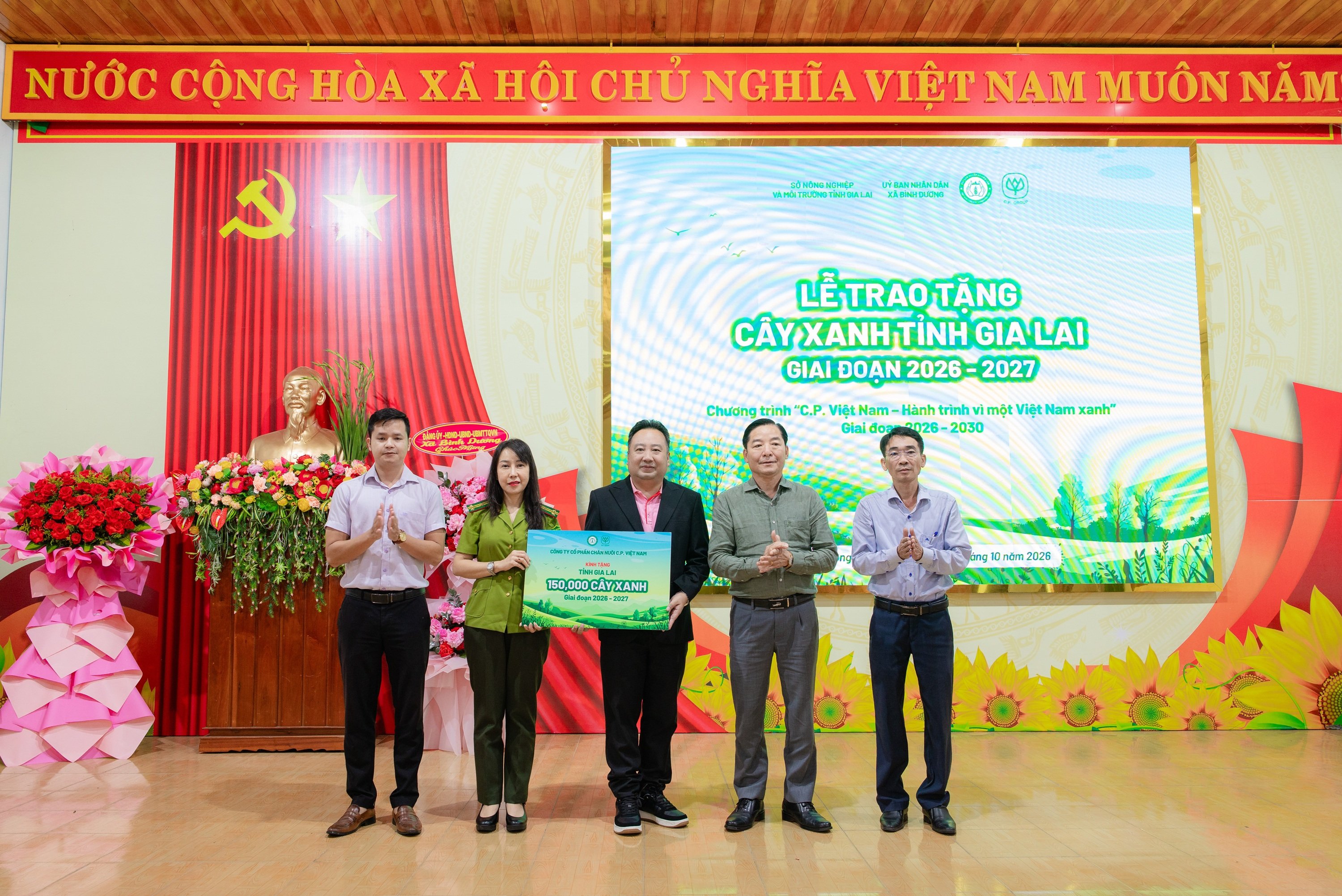
- Bảo vệ khí hậu: Hướng tới mục tiêu Net Zero vào năm 2050, C.P. Việt Nam đang đẩy mạnh quá trình chuyển đổi xanh và áp dụng mô hình kinh tế tuần hoàn. Nổi bật là hệ thống Biogas giúp thu hồi khí metan từ chất thải chăn nuôi, xử lý và dùng để phát điện cho trang trại, cùng dự án “C.P. Việt Nam - Hành trình vì một Việt Nam xanh” với kết quả đạt vượt mức kế hoạch 1,5 triệu cây trong giai đoạn 2021 - 2025.
- Nâng cao chất lượng cuộc sống: Song song với các nỗ lực về môi trường và sản phẩm, C.P. Việt Nam chú trọng tạo ra các tác động xã hội tích cực. Doanh nghiệp không ngừng nâng cao phúc lợi, xây dựng môi trường làm việc an toàn, đồng thời triển khai nhiều hoạt động hỗ trợ sinh kế và sức khỏe nhằm tạo ra giá trị bền vững cho cộng đồng.
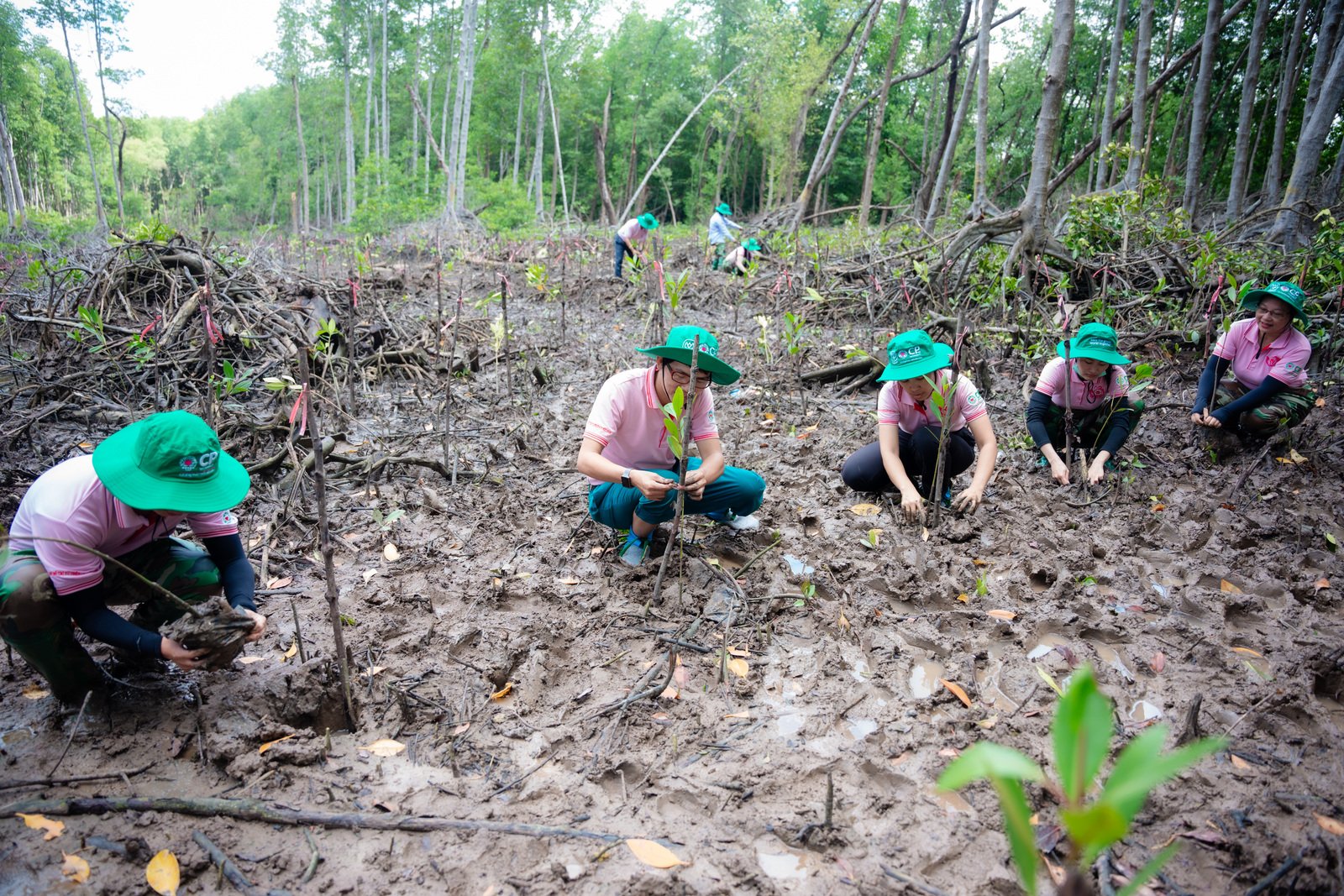
Hành trình vì một Việt Nam xanh của C.P. Việt Nam giúp cải thiện hệ sinh thái, tăng khả năng hấp thụ CO₂ và thúc đẩy phát triển bền vững
>> Tìm hiểu thêm:
- C.P. Việt Nam giới thiệu chuỗi giá trị chăn nuôi bền vững
- Công ty Cổ Phần Chăn Nuôi C.P. Việt Nam (CPV) chung tay thúc đẩy thủy sản bền vững
- C.P. Việt Nam khởi động các dự án chuyển đổi AI, thúc đẩy chuỗi giá trị nông nghiệp - thực phẩm thông minh, bền vững
- C.P. Việt Nam đồng hành IPVS 2026, góp phần thúc đẩy thực hành chăn nuôi heo bền vững
Nhìn chung, phát triển bền vững là một hành trình dài hạn, đòi hỏi sự cam kết và chung tay từ Chính phủ, cộng đồng doanh nghiệp và toàn xã hội. Việc cân bằng giữa tăng trưởng kinh tế, trách nhiệm xã hội và bảo vệ môi trường là nền tảng vững chắc cho hiện tại, đồng thời đảm bảo nguồn lực cho các thế hệ tương lai.
“Tại C.P. Việt Nam, chúng tôi tin rằng mỗi bước tiến trong kinh doanh phải luôn đi đôi với sự bền vững của hệ sinh thái. Với cam kết hướng tới mục tiêu Net Zero vào năm 2050, C.P. Việt Nam không ngừng hiện thực hóa trách nhiệm qua mô hình Kinh tế tuần hoàn và chuỗi giá trị tích hợp Feed - Farm - Food bền vững.
Chúng tôi nỗ lực tối ưu hóa năng lượng tái tạo, xử lý phế phẩm thành nguồn tài nguyên và kiên trì với dự án “C.P. Việt Nam - Hành trình vì một Việt Nam xanh” được triển khai từ 2021, hướng tới mục tiêu trồng 3 triệu cây xanh trong 10 năm để trung hòa carbon.
Cùng C.P. Việt Nam chung tay vì một hành tinh xanh, nơi mỗi bữa ăn ngon không chỉ mang đến giá trị dinh dưỡng mà còn góp phần gìn giữ môi trường cho các thế hệ tương lai.”
Nguồn: Định hướng phát triển bền vững và Dự án bền vững | C.P. Việt Nam
Tài liệu tham khảo:
[1] Khái niệm phát triển bền vững? Lộ trình thực hiện phát triển bền vững tại Việt Nam.
[2] Phát triển bền vững là gì?
https://vnexpress.net/phat-trien-ben-vung-4809628.html
[3] Công việc của chúng tôi về các Mục tiêu Phát triển Bền vững ở Việt Nam.
https://vietnam.un.org/vi/sdgs
[4] THE 17 GOALS | Sustainable Development.
[5] Transforming our world: the 2030 Agenda for Sustainable Development | Department of Economic and Social Affairs.
https://sdgs.un.org/2030agenda
[6] Doanh nghiệp phát triển bền vững: Vì sao họ thành công?
[7] Phát triển bền vững ở Việt Nam và gợi mở hai mô hình chính sách.
https://scp.gov.vn/tin-tuc/t11410/phat-trien-ben-vung-o-viet-nam-va-goi-mo-hai-mo-hinh-chinh-sach
[8] Conferences | Environment and sustainable development | United Nations.
https://www.un.org/en/conferences/environment
[9] Seventy five years of experience | IUCN.
https://iucn.org/about-iucn/history
[10] Báo Nhân Dân. Tiêu dùng xanh vì cộng đồng và môi trường.
https://nhandan.vn/lua-chon-tieu-dung-xanh-vi-cong-dong-post897364.html