From smallholder farms to industrial-scale operations, waste management is one of the major challenges in livestock farming, directly affecting both the environment and operational efficiency. Without proper treatment, livestock waste can cause soil, water, and air pollution. At the same time, rising energy costs are creating greater demand for more efficient and sustainable solutions.
Against this backdrop, biogas technology is considered an effective solution that enables organic waste treatment while recovering biogas for renewable energy production. Through the anaerobic digestion of organic matter in an oxygen-free environment, livestock waste is converted into a clean energy source, while the digestate can be further utilized as a high-quality organic fertilizer, contributing to a more complete circular agriculture model.
1. What is biogas technology in livestock farming?
Biogas technology in livestock farming is a method of treating organic waste through the process of anaerobic digestion. Waste such as livestock and poultry manure, urine, and wastewater is collected and transferred into sealed digesters or tanks. In an oxygen-free environment, microorganisms break down organic matter through multiple stages, producing biogas.
Biogas is a mixture of gases, primarily CH₄ (approximately 50–60%) and CO₂ (approximately 30%). It also contains small amounts of water vapor, H₂S, H₂, N₂, O₂, CO, and other compounds, depending on the feedstock and operating conditions of the system. Once recovered and appropriately treated, biogas can be used as a cooking fuel or supplied to generators to produce electricity, allowing waste to be treated while making use of renewable energy for production.
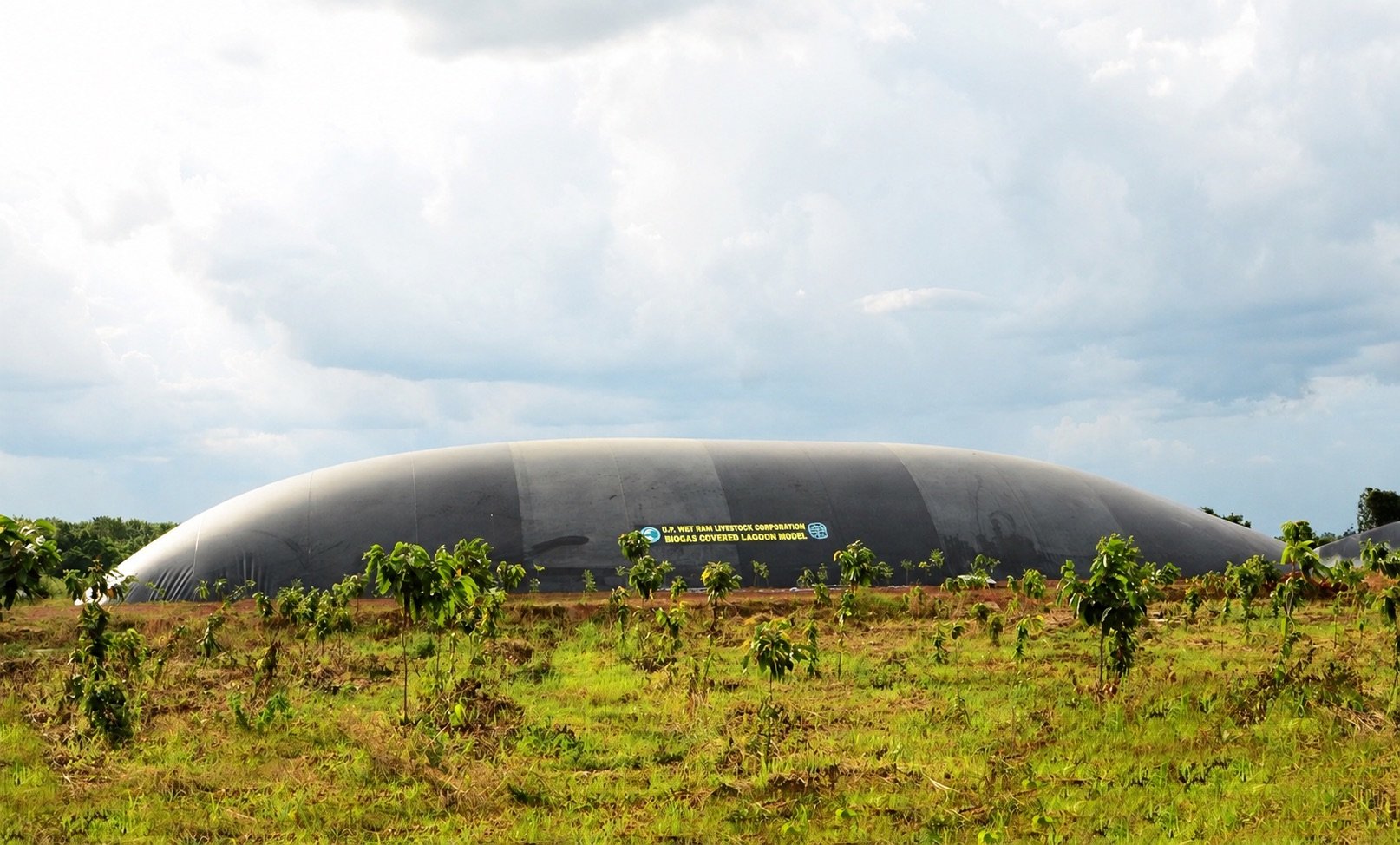
Biogas technology treats organic waste through anaerobic digestion
>> Read more:
- C.P. Vietnam accompanies IPVS 2026 in advancing sustainable swine production
- C.P. Vietnam launches AI transformation projects to advance smart and sustainable Agri-food Value chain
2. How does a biogas digester work?
A biogas digester operates through anaerobic digestion, in which microorganisms break down organic matter in an oxygen-free environment. The process can be broadly summarized into three main stages:
- Organic matter decomposition: Livestock and poultry manure, along with other organic waste such as kitchen waste, sugarcane bagasse, and brewer’s spent grain, is fed into the digester. Under anaerobic conditions, microorganisms break down organic compounds through multiple stages of conversion, generating biogas.
- Methane formation: Biogas consists primarily of CH₄ (50–60%), a combustible gas that can be used to generate energy, and CO₂. After recovery and treatment, methane can be used for cooking, electricity generation, or operating equipment.
- Maintaining anaerobic conditions: To ensure stable digestion and effective waste treatment, the digester must be properly sealed to limit oxygen intrusion and minimize biogas loss.
3. What are the most common types of biogas digesters?
Depending on the scale of livestock production, available land, investment budget, and operational requirements, farmers can choose a biogas system that best suits their actual conditions.
3.1. Brick-built biogas digesters
Brick-built biogas digesters are typically constructed underground using bricks, concrete, and waterproofing materials. One advantage of this type is the flexibility to customize the size and capacity according to herd size and available space. With a solid structure, these digesters are suitable for livestock farms that require stable waste treatment and long-term operation.
However, brick-built digesters generally require more time to construct and demand careful technical design and installation. Waterproofing and gas-tightness are particularly important to prevent cracking, water infiltration, or gas leakage during operation. When damage occurs, inspection, fault identification, and repairs can be more complicated than with prefabricated biogas systems.
3.2. Composite biogas digesters
Composite biogas digesters are prefabricated using composite materials and installed at a prepared site. Compared with brick-built digesters, they have a more compact structure, require less on-site construction, and can be installed relatively quickly. Composite materials also offer good resistance to environmental conditions and chemicals.
However, the initial investment cost of a composite biogas digester may be higher than that of a brick-built system. Its performance and durability depend on product quality, design, installation location, and construction techniques. In addition, pipes, valves, and joints must be properly installed and inspected to minimize the risk of leakage and biogas loss during operation.
3.3. Household biogas digesters using biogas bags
Biogas bags are systems that use flexible materials to contain waste and capture gas within a sealed chamber. Thanks to their simple structure, these systems can be installed relatively quickly without extensive construction, making them suitable for households with relatively small volumes of livestock waste.
One of the main advantages of biogas bags is their relatively low investment and installation cost. When properly designed and installed, they can capture biogas for certain household energy needs. However, because they are made from flexible materials, their durability and lifespan depend largely on material quality, environmental conditions, and how the system is used and protected. Users therefore need to regularly inspect the bag, pipes, and joints to detect and address potential gas leaks in a timely manner.
4. What are the advantages and limitations of biogas technology?
Biogas technology offers multiple benefits in livestock waste management while generating an energy source that can be reused. However, several limitations should also be considered before investing in and operating a system.
Advantages:
- Environmental protection: Livestock waste is collected and treated in sealed digesters, helping reduce odors and limit soil, water, and air pollution.
- Energy generation: CH₄ produced through anaerobic digestion is combustible and can be used for cooking or electricity generation.
- Waste utilization as fertilizer: The digestate generated after the digestion process can be further treated and used as organic fertilizer, helping recover nutrients and promote resource reuse in livestock production.
Limitations:
- Space requirements: The system requires suitable space for the digester, waste collection areas, and gas pipelines.
- Dependence on construction and installation quality: If the system is improperly designed, constructed, or installed, the digester and pipelines may crack, become loose, or leak gas, reducing biogas production efficiency and potentially creating safety risks.
5. C.P. Vietnam’s application of biogas technology in livestock farming
At C.P. Vietnam, biogas is not only considered a waste treatment technology but is also integrated into the company’s sustainable development and circular economy approach to livestock farming.
- A mandatory standard: Biogas systems are implemented consistently across the company’s own farms and are mandatory for contract farming operations, helping control and treat waste generated throughout the livestock production process.
- Energy self-sufficiency: Biogas (CH₄) recovered through waste digestion is used to power generators. The electricity generated can support ventilation fans, livestock heating and brooding systems, and other essential farm operations.
- Maximizing by-product utilization: Sludge remaining after biogas treatment is further processed into organic fertilizer. Wastewater is treated through a biological pond system to meet safety standards before discharge, helping reduce environmental impacts.
- Community protection: The waste treatment system helps control odors and reduce the risk of soil and groundwater pollution, thereby minimizing impacts on communities surrounding the farms.
- Net Zero commitment: Recovering biogas for energy production and reusing by-products helps reduce greenhouse gas emissions, while providing a practical example of C.P. Vietnam’s sustainable development direction and circular economy model.
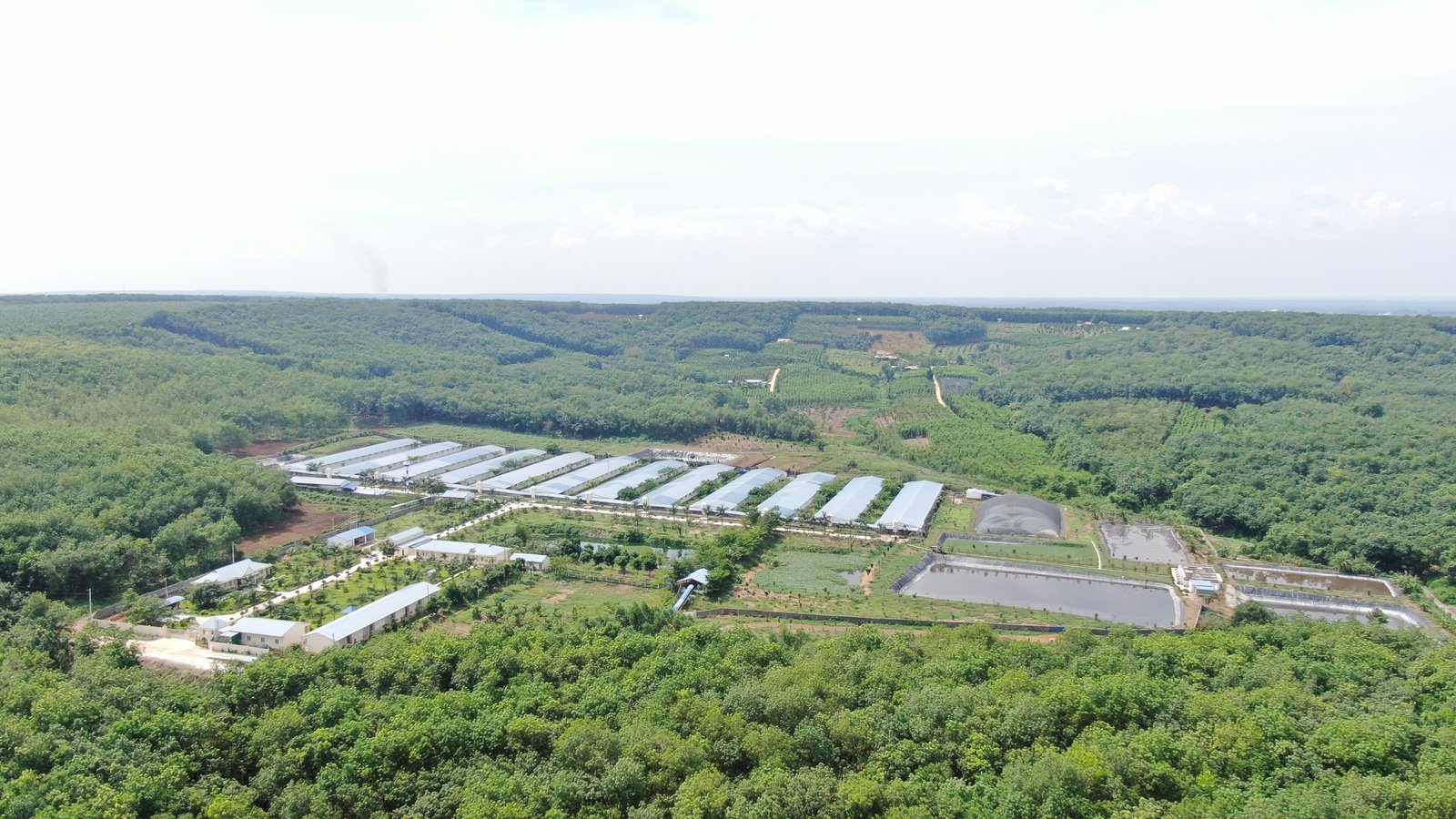
Biogas technology applied at C.P. Vietnam’s livestock farms helps turn livestock waste into renewable energy, contributing to reduced environmental impacts
>> Read more:
- C.P. landed its mark in shaping the agriculture sector
- C.P. Vietnam recognized among the Top 5 Most Innovative Enterprises in High-Tech Agriculture
- C.P. Vietnam showcases a sustainable livestock value chain
Biogas technology in livestock farming not only helps treat waste and reduce pollution but also generates renewable energy and organic fertilizer. When properly designed, invested in, and operated, biogas systems can improve production efficiency, conserve resources, and reduce emissions. This makes biogas a practical solution for promoting circular livestock farming and advancing green and sustainable agriculture.
“At C.P. Vietnam, we believe that every step forward in business must go hand in hand with the sustainability of our ecosystems. With our commitment to achieving Net Zero by 2050, C.P. Vietnam continues to put this responsibility into practice through the Circular Economy model and a sustainable, integrated Feed – Farm – Food value chain.
We strive to optimize the use of renewable energy, transform by-products into valuable resources, and remain committed to the ‘C.P. Vietnam – Journey for a Green Vietnam’ project, launched in 2021, with the goal of planting 3 million trees over 10 years to support carbon neutrality.
Together with C.P. Vietnam, let’s join hands for a greener planet, where every delicious meal not only provides nutritional value but also contributes to protecting the environment for future generations.”
Source: Sustainable Development Direction and Sustainable Projects | C.P. Vietnam
References
[1] Lecture: Livestock Waste Management
https://file.vnua.edu.vn/data/36/documents/2023/02/01/btvchannuoi/bai-giang-qlct-chan-nuoi-nuoi.pdf
[2] Study on Suitable Conditions for Anaerobic Digestion to Produce Biogas from Pineapple Leaf By-products
https://drive.google.com/file/d/1JnLZ_U5K4lbWxB7CtxPKXIZpL0gj2D6P/view?usp=sharing
[3] Study on the Anaerobic Digestion of Pig Farming Waste and Organic Household Waste in Rural Areas for Methane and Organic Fertilizer Production
https://drive.google.com/file/d/1ffNkA7DEt2AFivaN2D3_e1ZoBKMf4nX8/view?usp=sharing
[4] Environmental Impact Assessment Report
https://drive.google.com/file/d/1EZKfSBLtwk2ctuVnkIXVe3yXXCeBj2gt/view?usp=sharing